





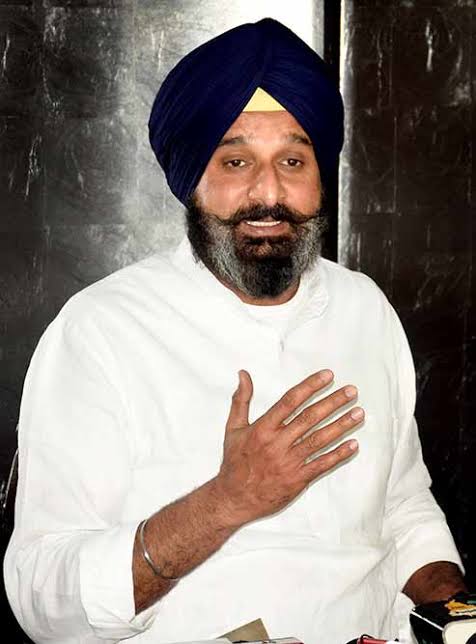
Political conspiracy” Against Akali Dal behind sacrilege cases in Punjab – Majithia
Yuvraj Singh Mann
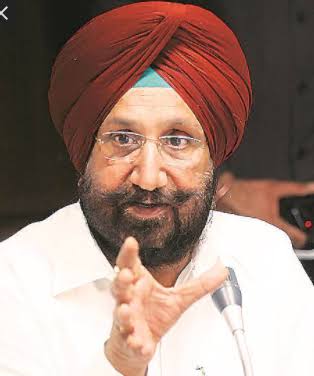
Chandigarh – Senior Shiromani Akali Dal leader Bikram Singh Majithia on Tuesday claimed that sacrilege incidents reported in Punjab over the past nine to ten years were part of a larger political conspiracy aimed at targeting the Akali Dal, citing government data to back his allegations.
Addressing the media, Majithia said that official figures related to incidents during the tenure of Bhagwant Mann led AAP government and the previous Congress regime have “exposed a deep-rooted conspiracy” against the Akali Dal. He alleged that more than 500 sacrilege incidents reported over the last nine years indicate a pattern, which, according to him, was politically motivated and designed to inflame public sentiment for electoral gains.
He further asserted that the cumulative data of nearly 597 sacrilege cases in the past decade, with convictions secured in only 44 cases, raises serious concerns over the functioning and intent of successive governments led by the Aam Aadmi Party and Congress. He questioned whether the low conviction rate pointed to investigative lapses or deliberate attempts to weaken cases.
Targeting AAP leadership, Majithia said that the conviction of Delhi-based AAP MLA Naresh Yadav in a sacrilege case by a Malerkotla court, where he was sentenced to two years in prison, further strengthens his claims. Referring to the 2016 Malerkotla incident, he said parts of the Quran Sharif were found discarded on a road, following which police registered a case against multiple accused. During the probe, Yadav’s name surfaced based on statements and evidence, and he was later convicted by the court. Majithia alleged that despite such developments, the AAP government continued to deflect blame and target the Akali Dal to conceal its own role. He said that the “truth has now come out” and that the people of Punjab are aware of what he termed as “politically engineered incidents.” Calling for accountability, Majithia demanded that Chief Minister Bhagwant Mann, AAP national convenor Arvind Kejriwal and Punjab Congress chief Raja Warring issue a public apology to the Sikh community. He alleged that religious sentiments were exploited to gain political power and claimed that such actions have now been exposed before the global Sikh community. He also referred to what he described as “unfulfilled promises” made by the AAP government after coming to power, including assurances of fast-track courts, time-bound justice in sacrilege cases, strict punishment for the guilty and action against erring officials. According to him, these commitments remained largely unimplemented. Raising further questions, Majithia pointed out that in 99 cases, the accused were acquitted. He asked whether this was due to weak investigations or a deliberate attempt to dilute evidence. He said the government must clarify its position on these issues. In a sharp attack, he also alleged that individuals linked to AAP not only figured among the accused in some cases but also provided legal representation to those involved. He claimed that some of these individuals were later rewarded with influential positions.
Presenting year-wise data, Majithia said 47 cases were reported in 2017, 40 in 2018 and 31 in 2019 during the Congress tenure. The number rose to 59 in 2020. He added that in 2021 and 2022, which coincided with election cycles and AAP’s rise to power, the number increased to 80. According to him, 54 cases were reported in 2023, 65 in 2024, and 22 in 2025, while nine cases have already been recorded till February 28 this year.
He also highlighted district-wise figures, stating that Amritsar Rural reported the highest number of cases at 51, followed by Amritsar city with 42 and Bathinda with 39. Tarn Taran recorded 36 cases, while Hoshiarpur and Patiala reported 35 cases each.
Concluding his remarks, Majithia reiterated that the pattern of incidents and data trends point towards a sustained political conspiracy, alleging that such developments were orchestrated to influence public perception and consolidate power.